SUMMARY
In the continuous casting processes you the charging of the metal and the eventual phases when the machine comes to rest are crucial factors, above all to coincide with the use of low quality crucibles and draw-plates, or with the case that their condition is not good. In these conditions in facts, there is a high probability that the metal attaches to the walls of the die, taking away some carbonaceous inclusions insde the section. These inclusions can cause breakings, above all in the case of following mechanical workings.
PROBLEM
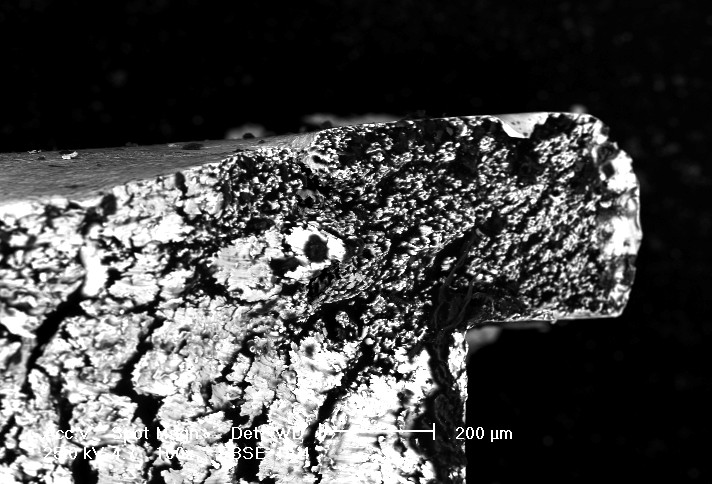
In the case we took in consideration the problems were faced in a section made of white gold 18 ct which presented breakings phenomena during annealing. Deeper analysis by the scanning electron microscope noticed that, in the breaking's sections, there was Carbon in high concentrations.
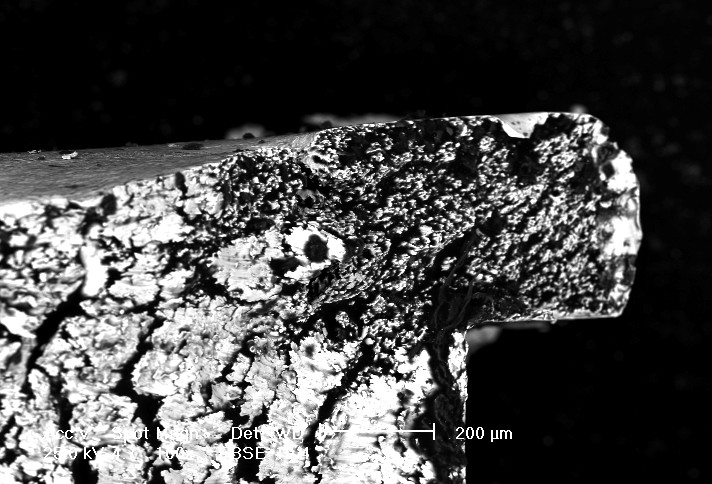
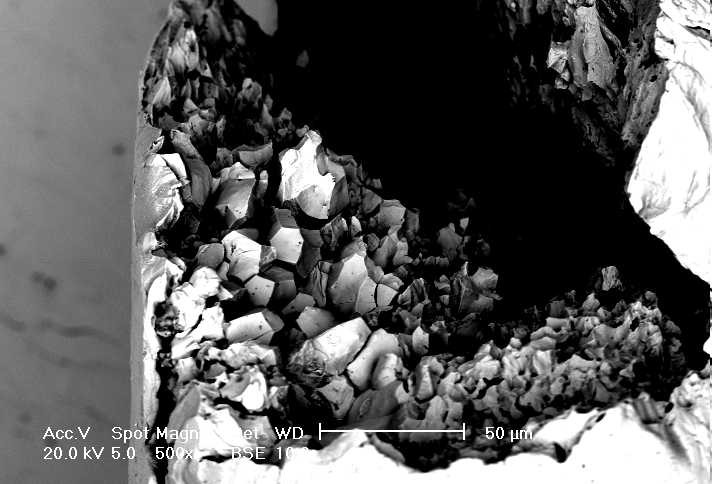
Carbon's presence was not evident immediately after casting. Only during mechanical deformation and during annealing it has been noticed a worsening of the mechanical properties of the alloyed metal and a reduction of the resistant section. As a consequence of this phenomenon, the breakings in question took place. There are several hypothesis about the possible causes of these inclusions. They may be due to the use of low quality or too old crucibles. Even the phases when the machine got to a rest or the metal's charging phases could have been crucial to arise this problem: the metal could have grabbed the die, taking away some graphite traces which would cause the inclusions.
SOLUTION
The phases of rest are the most critical for the sections to attach to the walls of the die (above all while working with white gold). For this reason it is very important to pay attention to:
- the quality of the crucible and the die
- avoid using crucibles and dies too old because graphite, wearing out, trends to flake
- limit as much as possible the phases when the machine comes to rest
- use inert gas in the furnace which can protect crucibles and dies from the excessive contact with the oxygen