SUMMARY
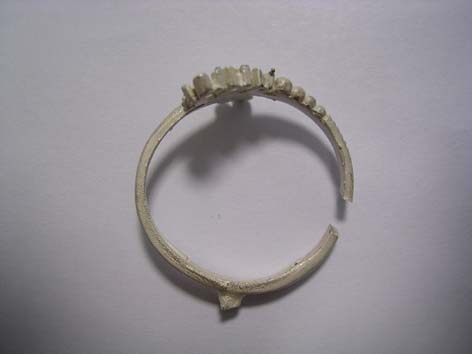
Shrinkage stresses cause the breakage of the workpiece.
PROBLEM
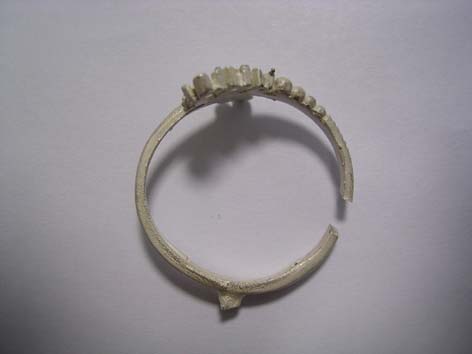
The problem manifests itself in the form of a clean breakage of the workpiece after the cylinder has been switched off. The fracture of the workpiece appears to be independent of the position of the wax on the spindle.
SOLUTION
Visually examining the pieces, the fracture is believed to be intergranular; Failure depends on the difference in contraction between metal and plaster during cooling. The presence of a low-melting phase, due to the presence of silicon at the grain boundary in the alloy, strongly reduces its mechanical resistance, which is not sufficient to support the stresses to which it is subjected. The consequence is the breakage of the piece.
In our opinion, it is necessary to cast the metal at the lowest possible temperature and raise the temperature of the cylinders to at least 650°C; This reduces the difference in contraction.
A league that is not particularly affected by this type of problem is our GENIA143.