SUMMARY
Calcination is a fundamental phase for obtaining an investment with the best possible features. If this phase is not perfectly performed, the investment can not reach the required chemical-physical properties. This involves a high probability of finding defects in the piece, such as porosities caused by incorporated investment or gas porosity by the reaction between metal and investment.
PROBLEM
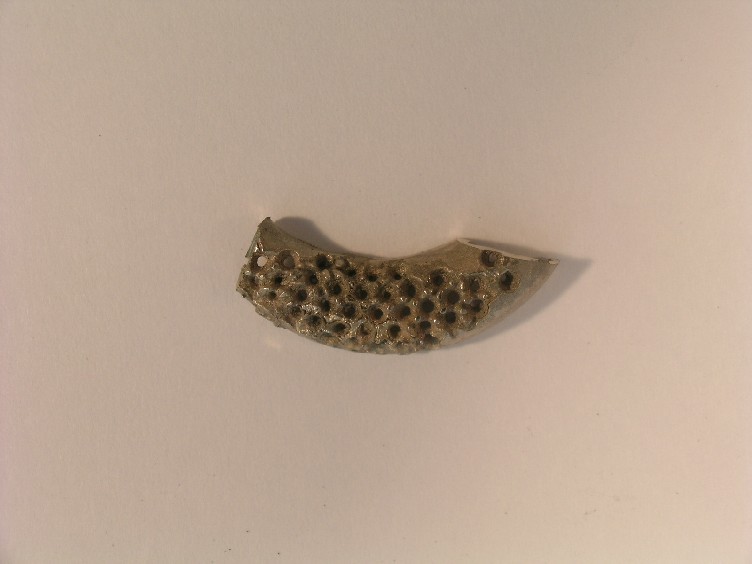
In this specific case an item displayed several inclusions of oxides, placed near the setting, which made impossible setting the stones in a proper manner. Many efforts of mechanical removing have been made, but without obtaining satisfactory results.
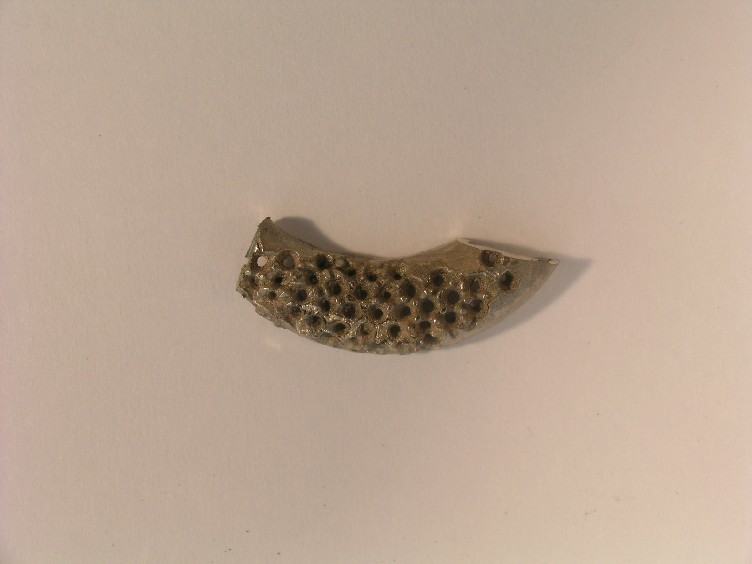
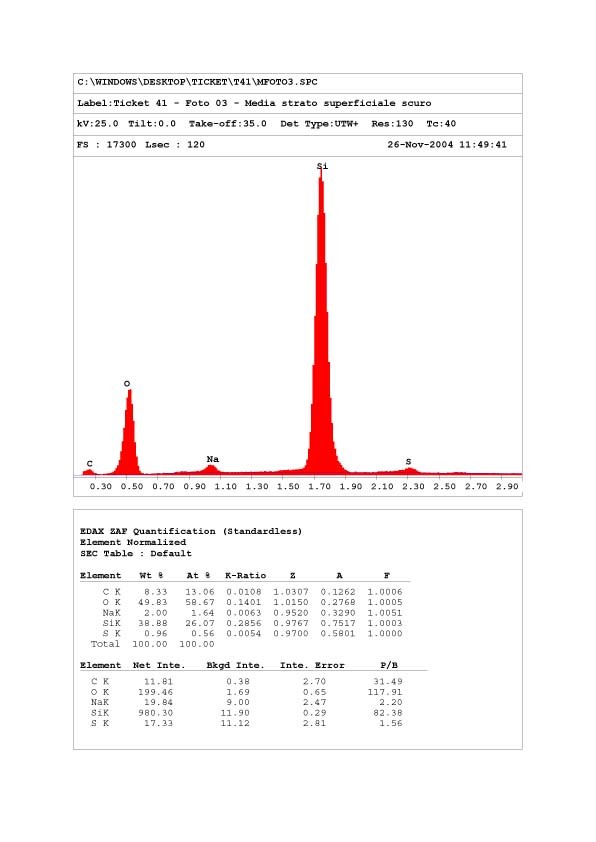
The analysis made using the scanning electron microscope on the areas involved by the defect outlined some areas with evident inclusions on the item's surface.
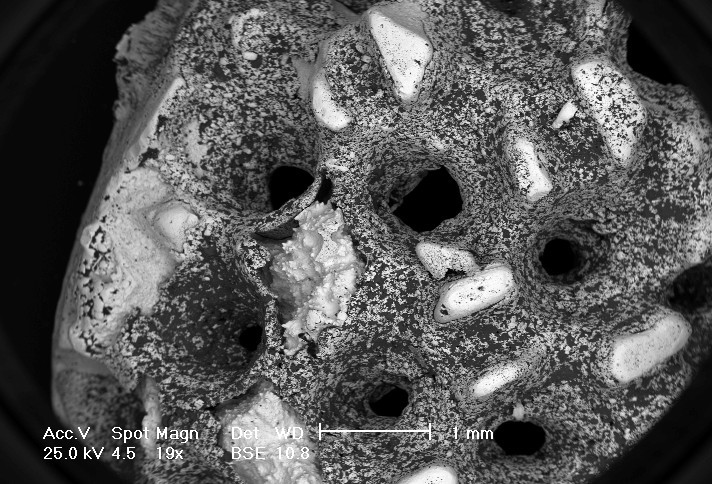
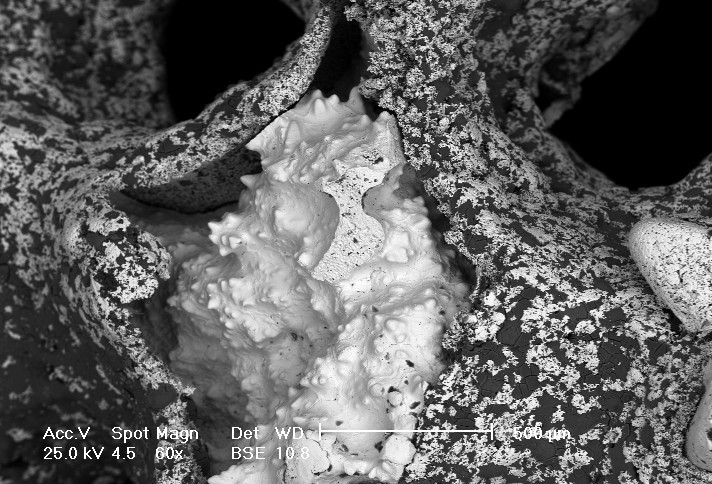
More accurate analysis (table in figure 4) let us find out that these inclusions were composed of C, Na, S and Si. The presence of these elements is probably due to the reaction happened between the metal and the investment during casting. Therefore we suppose that this phenomenon has been provoked by a calcination cycle not performed in the best possible way. In this specific case the cause could be found in the calcination phase happened at a temperature which was too low and producing an investment characterized by features not suitable to be used for casting.
SOLUTION
In order to avoid reactions between the metal and the investment, it is advisable to correctly carry out the calcination of the investment which will be used for the moulds. It would be better to:
- reach a proper temperature during calcination cycle (circa 740°C)
- assure that all flasks' areas reach the right temperature (to do this it is recommendable to maintain the flasks at the highest calcination temperature for at least three hours long)
- strictly follow the instructions supplied by the investment's producer.